
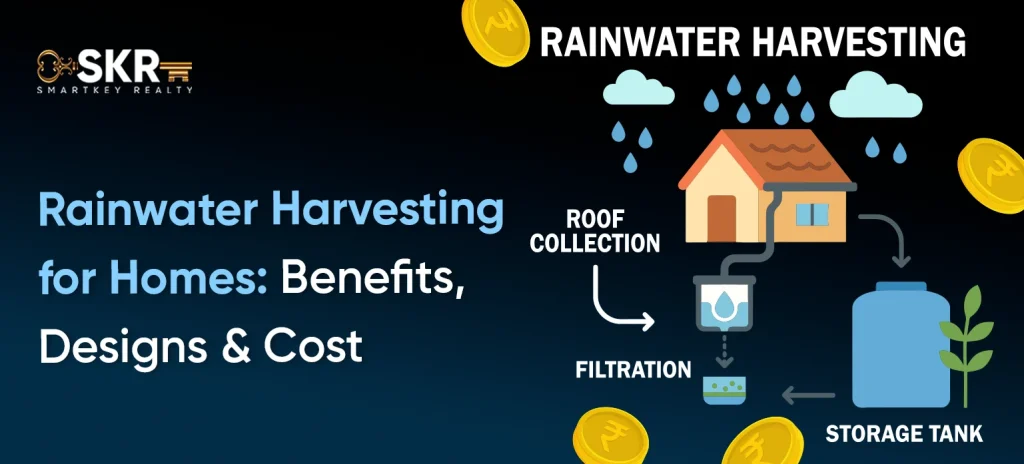
Water scarcity is a growing challenge in India, with steadily declining groundwater levels making sustainable water management essential.
As a solution, rainwater harvesting becomes a solid initiative. Whether for homeowners or commercial properties, it has now become a practical solution. Having a rainwater harvesting system reduces your dependency on external water sources. Especially in summer, when the groundwater levels are affected.
Here, we discuss why rainwater harvesting is essential, its benefits, designs, costs, and why it’s worth considering.
Get Exclusive Property Deals That Fit in Your Budget with SmartKey Realty
Understanding Rainwater Harvesting
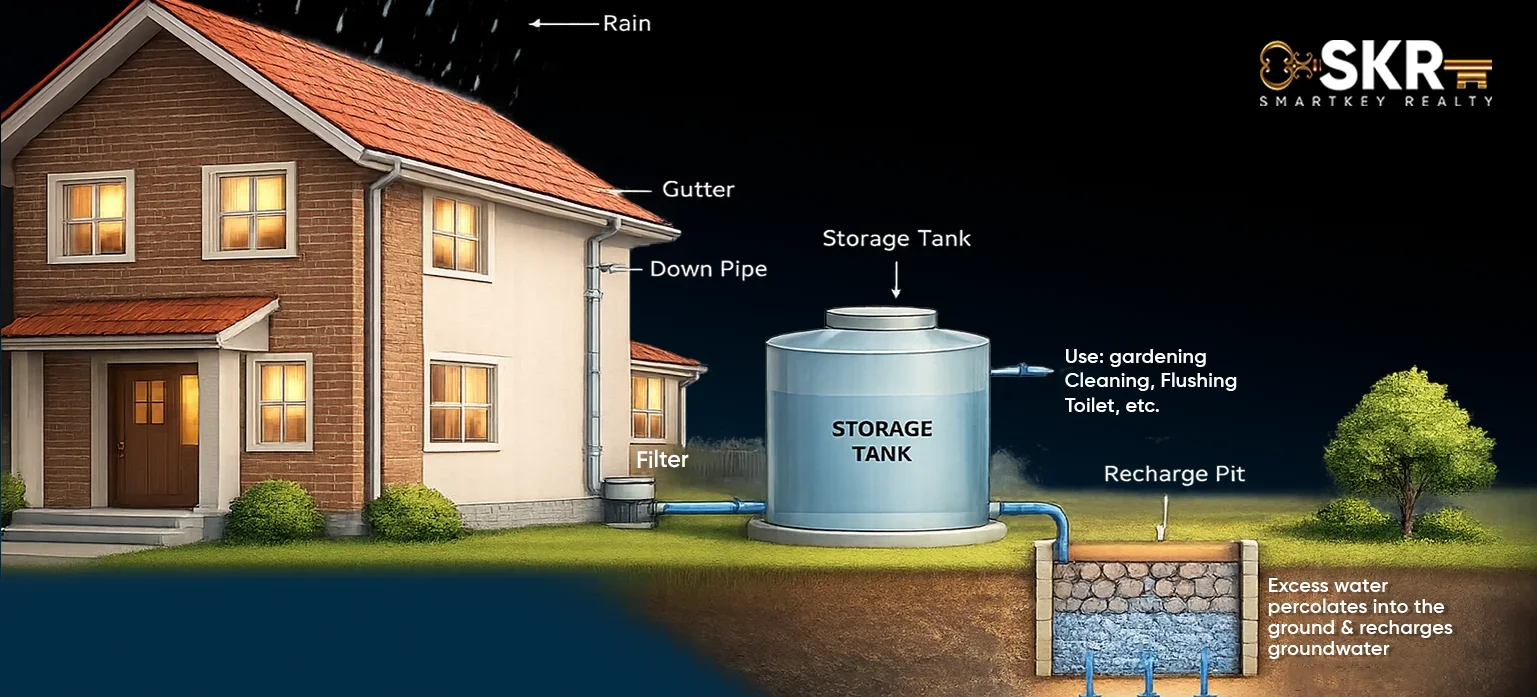
Rainwater harvesting refers to the process of collecting rainwater and storing it for future use. This method saves rainwater from going to waste.
In residential properties, rainwater is usually collected from:
- Rooftops
- Terraces
- Open paved areas
The collected water is then:
- Stored in underground or overhead tanks
- Filtered for household use
- Directed into recharge pits
Why More Homeowners Are Installing Rainwater Harvesting Systems
Homeowners now see it as:
- A cost-saving feature
- A practical backup during water shortages
- A smart long-term property investment
- A sustainability feature that improves home value
In many gated communities and premium residential projects, rainwater harvesting is already being marketed as a modern infrastructure advantage.
Benefits of Rainwater Harvesting in Homes
-
Reduced Dependence on Water Tankers
One of the biggest benefits is lower reliance on the external water supply. In water scarcity areas, people often spend large amounts on private tankers.
-
Lower Water Bills
Although rainwater harvesting may not completely replace municipal supply, it can significantly reduce water usage for:
- Gardening
- Car washing
- Cleaning outdoor spaces
- Toilet flushing
- General utility purposes
This naturally lowers monthly water expenses.
-
Maintains Groundwater Levels
The excess water can be directed to pits instead of drainage. This improves the groundwater levels. This is beneficial to replenish the groundwater in areas with limited water supply.
-
Adds Value to the Property
A home equipped with rainwater harvesting feels future-ready. This not only adds value to your property but also increases its sustainability.
Common Rainwater Harvesting Designs
-
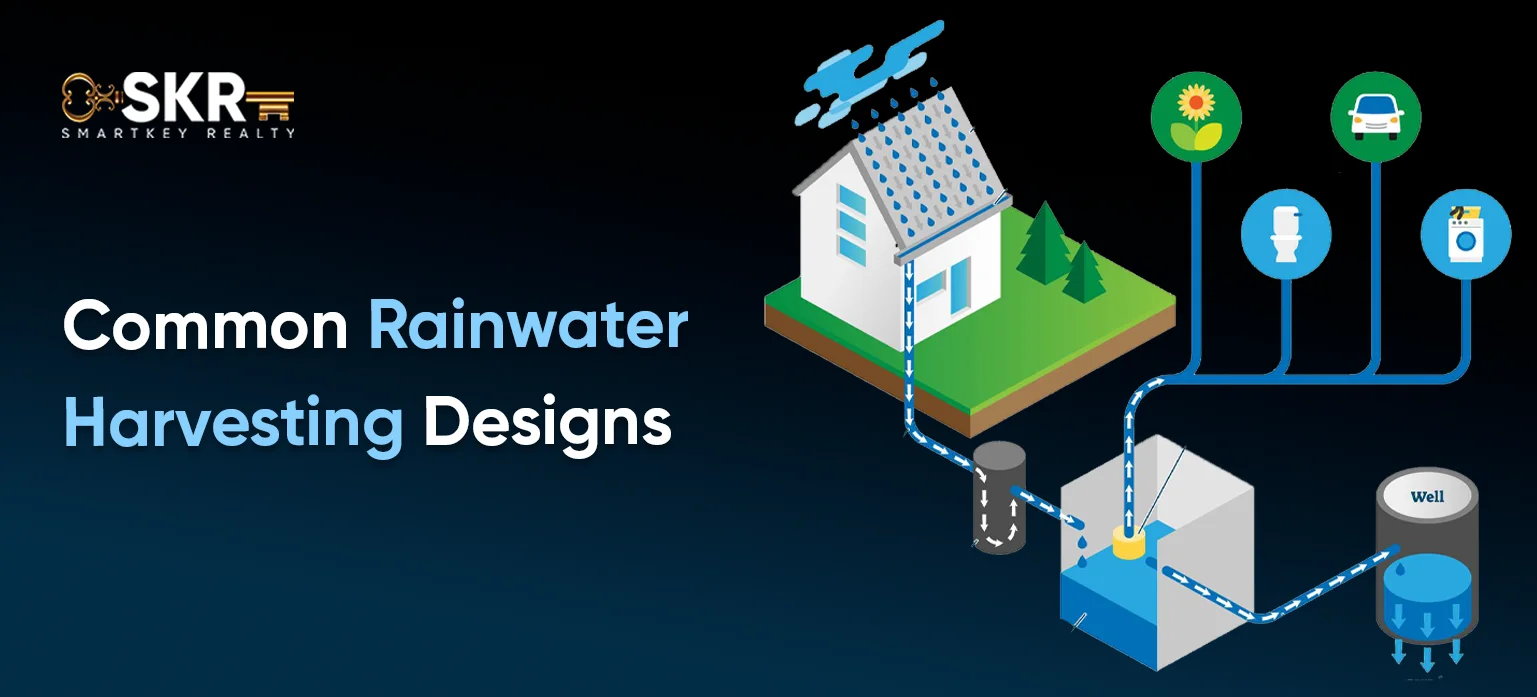
Rooftop Rainwater Harvesting
Rooftop design is the most common choice for residences.
How it works:
- Rainwater from the roof flows through pipes
- Water passes through a filter
- It is collected in a storage tank or recharge pit
This method works well for:
- Independent houses
- Villas
- Duplex homes
- Farmhouses
It’s also relatively simple to install in both existing and newly constructed homes.
-
Groundwater Recharge Pits
Instead of storing water, this system directs rainwater into specially designed pits that allow water to seep back underground.
This method is useful for:
- Areas with groundwater depletion
- Homes with limited storage space
- Large plots with open land
Many homeowners combine recharge pits with storage systems for better efficiency.
-
Underground Storage Tanks
In larger homes, rainwater can be stored in underground tanks and later reused for household applications.
These systems usually include:
- Filtration units
- Pumps
- Pipe connections
- Overflow systems
While installation costs are higher, underground storage systems are more efficient for long-term use.
Cost of Installing Rainwater Harvesting Systems in Homes
The installation cost depends on:
- Property size
- Roof area
- Storage capacity
- Filtration quality
- Complexity of the system
Here’s a rough estimate for residential properties in India:
| Type of System | Estimated Cost |
|---|---|
| Basic rooftop harvesting setup | ₹15,000 – ₹40,000 |
| Recharge pit system | ₹20,000 – ₹50,000 |
| Underground storage tank system | ₹50,000 – ₹2 lakh+ |
| Premium large-home systems | ₹2 lakh and above |
Things to Consider Before Installation
Evaluate the following before considering a rainwater harvesting system at your home:
- Roof size and water collection capacity
- Available storage space
- Water filtration requirements
- Maintenace costs
- Annual rainfall in the locality
Why Rainwater Harvesting Makes Sense for Modern Homes
Today, homebuyers are looking beyond just home decor and infrastructure. They are prioritising sustainability and efficiency too:
- Lower resource dependency
- Better property appeal
- Sustainability
Get Exclusive Property Deals That Fit in Your Budget with SmartKey Realty
Last Thoughts
Rainwater harvesting is a modern take on sustainability. The benefits of having such a system installed in your home or commercial property reduce your dependence on external sources of water. Especially during the summers when the ground level is extremely affected.
Installing a rainwater harvesting system increases your property value and prepares you for the future water challenges that may come. Equip your homes with a smart real estate investment like rainwater harvesting systems and add value to both your property and lifestyle.
With SmartKey Realty, you can stay ahead with real estate trends that enhance the value of your property. The experts here also recommend ways to improve your property’s sustainability. SmartKey Realty supports your real estate requirements through its budget-friendly deals. Contact us today!