
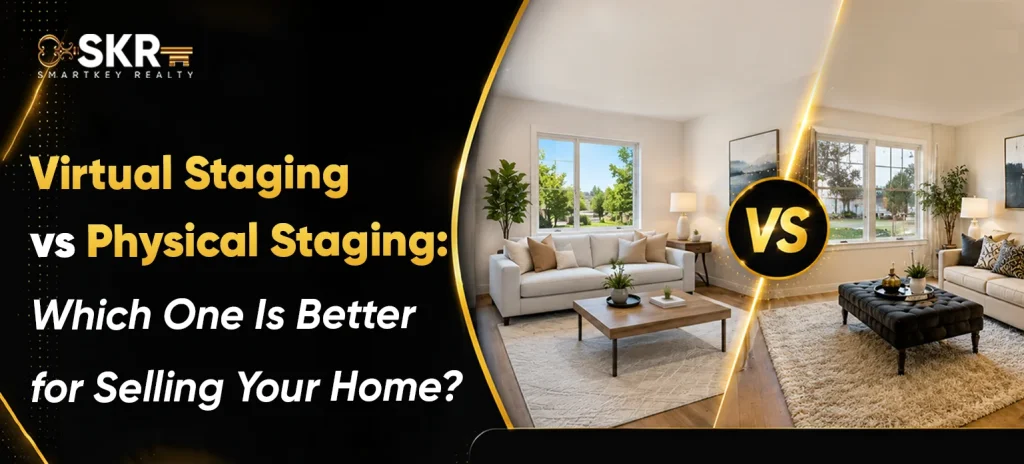
Virtual staging works best for online listings and vacant homes. Physical staging works best when buyers walk through the property in person. Which one fits your sale depends on your budget, timeline, and how buyers will mostly see the home — online, in person, or both.
This post covers everything about virtual and physical staging side by side, so you can decide which approach best fits your selling strategy.
What Is Virtual Staging?
Virtual staging is the process of digitally adding furniture and décor to photos of an empty property, using design software instead of real furniture.
It changes how a property looks in photos — not the property itself.
Key points:
- Furniture is added digitally to real photos
- The actual room stays empty
- Ready in 24–48 hours
- Costs much less than real furniture
- Can show the same room in different styles
- Must be labeled “virtually staged” on listings
Make the Right Property Decisions with SmartKey Realty
Why it’s used:
Empty rooms are hard for buyers to picture. Virtual staging fills that gap by showing how a space could look- fast and affordably. It’s most useful for vacant homes, new construction, rental listings, and agents managing multiple properties, since one photo can be styled several ways at a low cost.
Things to Keep in Mind With Virtual Staging
Virtual staging is quick and affordable, but it only changes the photos. Buyers will still see the actual empty space when they visit the property.
What Is Physical Staging?
Physical staging is the process of furnishing a home with real furniture and décor to prepare it for Selling Your Home. It changes the actual property- not just the photos.
Key points:
- Real furniture is delivered and arranged in the home
- Buyers can walk through and experience it in person
- Takes days to a few weeks to set up
- Costs more (furniture rental, delivery, labor)
- What buyers see in photos matches what they see in person
- Best for homes with regular in-person showings
Why it’s used:
A professional stager designs the space to highlight its strengths- using furniture placement to make rooms feel bigger, brighter, or more move-in ready. Because everything is real, buyers get an authentic experience with no gap between the marketing and reality. This builds trust and often creates a stronger emotional connection to the home.
Things to Keep in Mind With Physical Staging
Physical staging gives buyers a real view of the furnished home, but it requires more time, planning, and money for furniture, delivery, and setup.
Key Differences Between Virtual Staging and Physical Staging
| Factor | Virtual Staging | Physical Staging |
|---|---|---|
| What it changes | Only the listing photos | Actual rooms |
| How it's done | Furniture added digitally using software | Real furniture delivered and arranged in the home |
| Time needed | Usually hours to 1–2 days | Usually several days or longer |
| Cost | Lower — no furniture, delivery, or labor costs | Higher — furniture rental, delivery, setup, and removal |
| Buyer experience | Buyers see furnished rooms online | Buyers can see and experience the furniture in person |
| Flexibility | Easy to try multiple styles for the same room | Limited to whatever is physically set up |
| Best for | Vacant homes, new construction, rentals, online-first listings | Homes with frequent showings, open houses, higher-end properties |
| Disclosure requirement | Must be labeled "virtually staged" on most listings | No disclosure needed — what's shown is real |
| Risk | Small chance photos don't match the in-person space | None — photos and reality always match |
| Scalability | Easy to stage many rooms or listings at once | Harder to scale across multiple properties |
Factors to Consider When Choosing Virtual Staging vs. Physical Staging
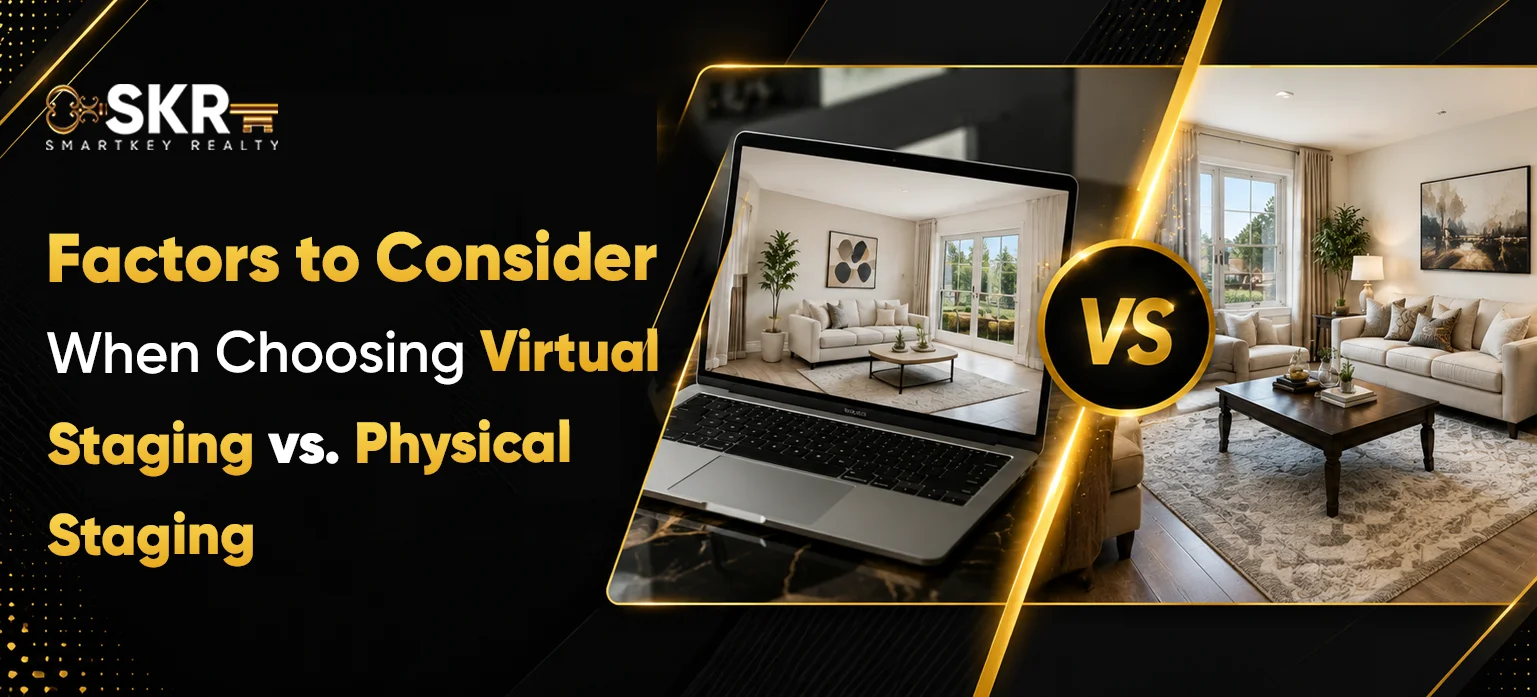
Explore these key factors to consider before deciding between Virtual Staging vs. Physical Staging for selling your property:
1. Your Budget
Money is usually the first thing people think about. Virtual staging costs less because you don’t have to rent, deliver, or set up real furniture. Physical staging costs more, but it can be worth it for expensive homes where buyers expect everything to look perfect in person.
What to Keep in Mind:
- Virtual staging is cheaper upfront
- Physical staging costs more (furniture rental, delivery, setup, pickup)
- Virtual staging saves more money if you’re staging several rooms or homes
2. How Buyers View the Property
Think about where buyers will first notice your home. If most people find it online through photos, virtual staging makes those photos more appealing. If you’re planning a lot of showings or open houses, physical staging gives buyers something real to walk through.
What Matters Most:
- Virtual staging is great for online listings
- Physical staging works better for open houses and in-person visits
- Think about both — how many people will see it online vs. in person
3. Staging and Listing Time
If you’re in a hurry, this matters a lot. Virtual staging is quick since there’s no furniture to move or set up. Physical staging takes more time because you have to pick furniture, schedule delivery, and arrange each room.
Time to Consider:
- Virtual staging can be done in just a few days
- Physical staging usually takes longer to organize
- Choose virtual staging if you need to list fast
4. Staging an Empty vs. Furnished Home
An empty home can look cold and hard to picture in photos — that’s where virtual staging helps the most. If the home is already furnished, you might just need to rearrange a few things instead of doing full staging.
Best Option for Your Home:
- Empty homes are perfect for virtual staging
- Furnished homes may only need small physical touch-ups
- Virtual staging shows buyers how empty rooms could actually be used
5. Property Type and Price
The house you sell matters too. Luxury properties benefit from physical staging because purchasers anticipate a high-quality experience. Virtual staging works well for rentals or mid-range properties, particularly internet-promoted ones.
What Works Best:
- Luxury homes often need real, physical staging
- Virtual staging is a good fit for mid-range and rental homes
- Match your staging choice to what your buyers expect
6. Staging Multiple Rooms or Properties
If you have multiple rooms or several properties to stage, virtual staging is much easier to manage. You can create staged photos for different rooms without moving furniture around. This saves both time and money, especially for agents or property managers handling multiple listings.
Why It Matters:
- Virtual staging works fast across many rooms
- It’s easier to manage multiple listings this way
- Physical staging gets expensive fast when you’re staging several properties
7. Setting the Right Buyer Expectations
It’s important that staged photos actually reflect what buyers will see in person. With physical staging, what’s in the photos is really in the home. With virtual staging, the furniture is added digitally, so it needs to look realistic and be clearly labeled as staged.
Important to Remember:
- Physical staging photos always match the real property
- Virtual staging should reflect the room’s actual size and layout
- Always let buyers know when photos are virtually staged
Make the Right Property Decisions with SmartKey Realty
Conclusion
Wondering which staging option is best for selling your home? SmartKey Realty provides verified listings, market intelligence, and tailored advice to assist buyers and sellers in making well-informed real estate choices.