Categories
buy property

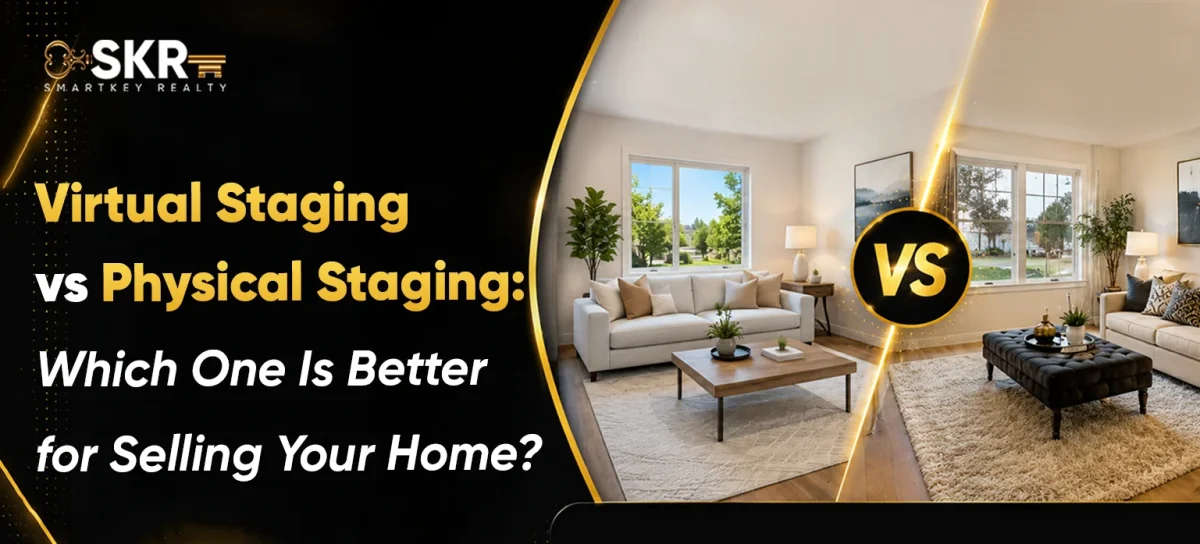
Virtual Staging vs Physical Staging: Which One Is Better for Selling Your Home?

Virtual staging works best for online listings and vacant homes. Physical staging works best when buyers walk through the property in person. Which one fits your sale depends on your budget, timeline, and how buyers will mostly see the home — online, in person, or both.

This post covers everything about virtual and physical staging side by side, so you can decide which approach best fits your selling strategy.

What Is Virtual Staging?

Virtual staging is the process of digitally adding furniture and décor to photos of an empty property, using design software instead of real furniture.

It changes how a property looks in photos — not the property itself.

Key points:

  • Furniture is added digitally to real photos
  • The actual room stays empty
  • Ready in 24–48 hours
  • Costs much less than real furniture
  • Can show the same room in different styles
  • Must be labeled “virtually staged” on listings

Make the Right Property Decisions with SmartKey Realty

Why it’s used:

Empty rooms are hard for buyers to picture. Virtual staging fills that gap by showing how a space could look- fast and affordably. It’s most useful for vacant homes, new construction, rental listings, and agents managing multiple properties, since one photo can be styled several ways at a low cost.

Things to Keep in Mind With Virtual Staging

Virtual staging is quick and affordable, but it only changes the photos. Buyers will still see the actual empty space when they visit the property.

What Is Physical Staging?

Physical staging is the process of furnishing a home with real furniture and décor to prepare it for Selling Your Home. It changes the actual property- not just the photos.

Key points:

  • Real furniture is delivered and arranged in the home
  • Buyers can walk through and experience it in person
  • Takes days to a few weeks to set up
  • Costs more (furniture rental, delivery, labor)
  • What buyers see in photos matches what they see in person
  • Best for homes with regular in-person showings

Why it’s used:

A professional stager designs the space to highlight its strengths- using furniture placement to make rooms feel bigger, brighter, or more move-in ready. Because everything is real, buyers get an authentic experience with no gap between the marketing and reality. This builds trust and often creates a stronger emotional connection to the home.

Things to Keep in Mind With Physical Staging

Physical staging gives buyers a real view of the furnished home, but it requires more time, planning, and money for furniture, delivery, and setup.

Key Differences Between Virtual Staging and Physical Staging

FactorVirtual StagingPhysical Staging
What it changesOnly the listing photosActual rooms
How it's doneFurniture added digitally using softwareReal furniture delivered and arranged in the home
Time neededUsually hours to 1–2 daysUsually several days or longer
CostLower — no furniture, delivery, or labor costsHigher — furniture rental, delivery, setup, and removal
Buyer experienceBuyers see furnished rooms onlineBuyers can see and experience the furniture in person
FlexibilityEasy to try multiple styles for the same roomLimited to whatever is physically set up
Best forVacant homes, new construction, rentals, online-first listingsHomes with frequent showings, open houses, higher-end properties
Disclosure requirementMust be labeled "virtually staged" on most listingsNo disclosure needed — what's shown is real
RiskSmall chance photos don't match the in-person spaceNone — photos and reality always match
ScalabilityEasy to stage many rooms or listings at onceHarder to scale across multiple properties

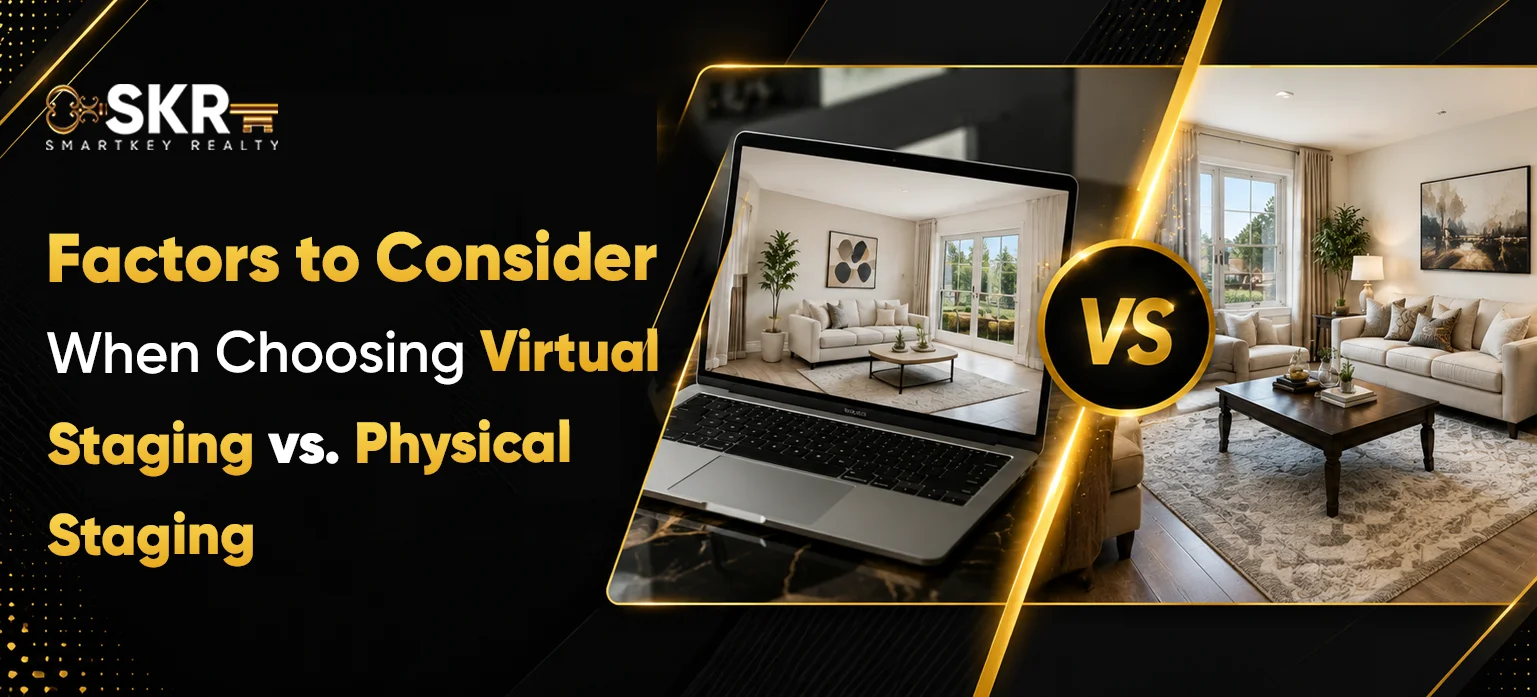
Factors to Consider When Choosing Virtual Staging vs. Physical Staging
Virtual Staging vs. Physical Staging

Explore these key factors to consider before deciding between Virtual Staging vs. Physical Staging for selling your property: 

1. Your Budget

Money is usually the first thing people think about. Virtual staging costs less because you don’t have to rent, deliver, or set up real furniture. Physical staging costs more, but it can be worth it for expensive homes where buyers expect everything to look perfect in person.

What to Keep in Mind:

  • Virtual staging is cheaper upfront
  • Physical staging costs more (furniture rental, delivery, setup, pickup)
  • Virtual staging saves more money if you’re staging several rooms or homes

2. How Buyers View the Property

Think about where buyers will first notice your home. If most people find it online through photos, virtual staging makes those photos more appealing. If you’re planning a lot of showings or open houses, physical staging gives buyers something real to walk through.

What Matters Most:

  • Virtual staging is great for online listings
  • Physical staging works better for open houses and in-person visits
  • Think about both — how many people will see it online vs. in person

3. Staging and Listing Time

If you’re in a hurry, this matters a lot. Virtual staging is quick since there’s no furniture to move or set up. Physical staging takes more time because you have to pick furniture, schedule delivery, and arrange each room.

Time to Consider:

  • Virtual staging can be done in just a few days
  • Physical staging usually takes longer to organize
  • Choose virtual staging if you need to list fast

4. Staging an Empty vs. Furnished Home

An empty home can look cold and hard to picture in photos — that’s where virtual staging helps the most. If the home is already furnished, you might just need to rearrange a few things instead of doing full staging.

Best Option for Your Home:

  • Empty homes are perfect for virtual staging
  • Furnished homes may only need small physical touch-ups
  • Virtual staging shows buyers how empty rooms could actually be used

5. Property Type and Price

The house you sell matters too. Luxury properties benefit from physical staging because purchasers anticipate a high-quality experience. Virtual staging works well for rentals or mid-range properties, particularly internet-promoted ones.     

What Works Best:

  • Luxury homes often need real, physical staging
  • Virtual staging is a good fit for mid-range and rental homes
  • Match your staging choice to what your buyers expect

6. Staging Multiple Rooms or Properties

If you have multiple rooms or several properties to stage, virtual staging is much easier to manage. You can create staged photos for different rooms without moving furniture around. This saves both time and money, especially for agents or property managers handling multiple listings.

Why It Matters:

  • Virtual staging works fast across many rooms
  • It’s easier to manage multiple listings this way
  • Physical staging gets expensive fast when you’re staging several properties

7. Setting the Right Buyer Expectations

It’s important that staged photos actually reflect what buyers will see in person. With physical staging, what’s in the photos is really in the home. With virtual staging, the furniture is added digitally, so it needs to look realistic and be clearly labeled as staged.

Important to Remember:

  • Physical staging photos always match the real property
  • Virtual staging should reflect the room’s actual size and layout
  • Always let buyers know when photos are virtually staged

Make the Right Property Decisions with SmartKey Realty

Conclusion 

Wondering which staging option is best for selling your home? SmartKey Realty provides verified listings, market intelligence, and tailored advice to assist buyers and sellers in making well-informed real estate choices. 

Categories
buy property

12 French Door Design Ideas in Different Color Combinations

French doors can make a room feel brighter, more open, and more stylish. The right color combination can also change the overall look of the space, whether you prefer a modern, classic, rustic, or elegant interior. From timeless white-and-black combinations to warm wood tones and bold colors, there are many ways to design French doors to match your home.

Find Your Ideal Home With SmartKey Realty

Are you planning to install French doors in your home? Keep reading this post and explore 12 French door design ideas with different color combinations.

Top 12 French Door Design Ideas in Different Color Combinations

Here are 12 French door design ideas in different color combinations: 

Modern & Minimalist

1. Matte Black Frames with Brass Hardware

Matte black French doors contrast well with white, cream, or light walls. Brass handles brighten up the dark frame and soften the style.

Key pointers:

  • Works well with modern and industrial interiors
  • Black frames create a strong visual focus
  • Brass hardware adds warmth and elegance
  • Looks great with light walls and natural wood furniture

2. Slimline Aluminum with Clear Glass

French doors look contemporary with slim metal frames and wide transparent glass panes. Simply designed rooms let in plenty of natural light.

Key pointers:

  • Best for modern and contemporary homes
  • Large glass panels make rooms feel more open
  • Minimal frames keep the design simple
  • Works well with metallic and neutral décor

3. Charcoal Gray with Minimalist Grids

If black feels too strong, charcoal gray is a softer option. It still gives the doors a modern look while blending more easily with gray, beige, white, and natural wood interiors.

Key pointers:

  • Softer alternative to black
  • Works well with Scandinavian interiors
  • Matches light and warm neutral walls
  • Simple grids keep the doors looking clean

4. Bronze Frames with Large Glass Panes

Bronze is warm yet not bold like black. For attractive, bright, and open doors, mix it with wide glass panes.

Key pointers:

  • Adds a warm metallic touch
  • Suitable for modern and luxury interiors
  • Large glass panes maximize natural light
  • Pairs well with beige, cream, and wood tones

Classic & Timeless

5. Crisp White with Traditional Grids

White French doors are traditional and fit most interiors. Traditional glass grids offer flair and lighten the atmosphere. Farmhouse-inspired interiors often feature white and natural wood.

Key pointers:

  • Works with traditional and farmhouse styles
  • Makes the room feel brighter
  • Easy to match with existing décor
  • Traditional grids add a timeless look

6. Dark Navy Blue with Gold Handles

Navy blue French doors add elegance to a space. Gold knobs create contrast and decorate the doors.

Key pointers:

  • Creates an elegant and classic look
  • Works well in studies and living rooms
  • Gold hardware adds a premium touch
  • Pairs well with white, cream, and light gray

7. Natural Oak with Brass Details

Natural oak brings warmth and texture into the room. Instead of covering the wood with paint, keeping its natural grain visible can make the French doors feel more welcoming.

Key pointers:

  • Adds natural warmth to the room
  • Works well with modern and traditional décor
  • Brass hardware complements the wood
  • Looks especially good with neutral walls

8. Cream or Cashmere with Soft Lighting

Cream or cashmere-colored doors create a soft and comfortable look. This combination works particularly well when paired with warm lighting, beige furniture, and natural textures.

Key pointers:

  • Creates a warm and cozy atmosphere
  • Good for transitional interiors
  • Works well with beige and brown décor
  • Soft lighting enhances the color

Colorful & Statement

9. Muted Sage Green with Silver Accents

Sage green softens door color without dominating. It suits natural wood, white walls, plants, and other earthy features. Mild green accent colors are frequently employed in quiet interiors.

Key pointers:

  • Brings a natural feel to the room
  • Works well with wood flooring
  • Silver hardware adds a clean contrast
  • Ideal for relaxed and nature-inspired interiors

10. Soft Dusty Blue with White Trim

Dusty blue French doors can add a fresh and peaceful touch to your home. White trim keeps the combination light and makes the blue stand out without becoming too bold.

Key pointers:

  • Creates a calm and airy look
  • Works well with white walls
  • Suitable for bedrooms and living spaces
  • Complements light wood and neutral furniture

11. Sunflower Yellow with White Walls

Yellow French doors provide a cheery focal point. Yellow stands out against white walls and works nicely for garden-facing doors.

Key pointers:

  • Adds energy and personality
  • Works well as an accent color
  • White walls keep the combination balanced
  • Suitable for garden rooms and outdoor-facing spaces

12. Two-Tone French Doors

A two-tone French door allows you greater versatility by choosing contrasting colors inside and out. White inside can complement your space while forest green or deep crimson outdoors may boost curb appeal.

Key pointers:

  • Lets you match both interior and exterior styles
  • Creates a more personalized design
  • Neutral interior colors keep the room balanced
  • Bold exterior colors can make the entrance stand out

Tips to Choose the Right Color Combination for French Door Design

French Door Design

Picking the right color for your French doors is easier when you look at the whole room, not just the door itself. Think about your walls, flooring, furniture, natural light, and overall style before deciding on a final color.

1. Match Your Room Colors

Pick a door color that works with the colors you already have.

  • Match it to your walls or furniture
  • Use similar shades for a calm, blended look
  • Or go with a contrasting color if you want the doors to stand out

2. Consider Natural Light

Light changes how a color looks throughout the day.

  • Use white or cream in darker rooms
  • Try darker frames in bright, sunny spaces
  • Always check paint samples in both daylight and artificial light before deciding

3. Match Your Home Style

Your door color should fit the vibe of your home.

  • Black suits modern homes
  • White fits classic and farmhouse styles
  • Natural wood adds warmth to rustic spaces
  • Sage green or dusty blue works well in relaxed, nature-inspired homes

4. Pick Matching Door Hardware

Handles and hinges add their own bit of style.

  • Brass feels warm and elegant
  • Black feels modern
  • Silver feels clean and simple
  • Try to match hardware with other finishes already in the room

5. Choose the Right Trim Color

The trim around your doors also changes the overall look.

  • White trim pairs well with colorful doors
  • Matching trim to the door gives a smooth, seamless look
  • Contrasting trim makes a bolder visual statement

6. Match Indoor and Outdoor Colors

If your French doors lead outside, the color needs to work on both sides.

  • Match the interior side to your room’s décor
  • Match the exterior side to your home’s outside look
  • Or use a two-tone design for the best of both

7. Test the Door Color First

A color often looks different on a full-size door than on a tiny paint sample.

  • Test it on a small section first
  • Look at it during different times of day
  • Compare it next to your flooring, walls, and furniture
  • Only make your final decision once you’ve seen the full picture

Find Your Ideal Home With SmartKey Realty

Conclusion

Finding a home that matches your lifestyle? Get in touch with SmartKey Realty. Get verified listings, local market insights, and individualized coaching from our real estate specialists to make smart property choices.

Categories
buy property

Location vs Size: Which Matters More for Property Investment?

The right choice between property location and size depends on your investment goals, budget, and long-term plans. 

Location tends to carry more weight for long-term appreciation, rental demand, and resale value, since it’s the one variable in real estate that can never be altered. Property size, by contrast, directly shapes usability and livability, and unlike location, size-related limitations can often be addressed through renovation or expansion.

Invest In The Best Properties With SmartKey Realty

This guide breaks down the real impact of both factors and provides a practical framework to help you determine which one should actually drive your specific investment decision.

Why Property Location Matters in Real Estate Investment

Location is the primary consideration among many investors when buying real estate, and for good reason. Location impacts rentability, value growth, and sale speed. You can renovate a house or apartment but not move it. Smaller properties in good locations do better than bigger ones in less attractive areas.

Good Connectivity Makes Life Easier

Location near highways, metro stations, bus stops, or key roads is frequently more handy. People choose residences with easy access to jobs, school, and other locations.

Benefits:

  • Saves travel time
  • Makes daily commuting easier
  • Attracts more buyers and tenants
  • Increases property demand

Nearby Schools Increase Demand

Many families want to live close to good schools because it makes daily travel easier for children. Homes near schools are often more popular with buyers.

Benefits:

  • Attracts family buyers
  • Makes daily life more convenient
  • Keeps demand high
  • Helps maintain property value

Close to Workplaces

Properties near offices, business areas, hospitals, and IT parks are popular because people prefer living close to where they work.

Benefits:

  • Attracts working professionals
  • Increases rental demand
  • Helps earn better rental income
  • Improves occupancy rates

Safe and Clean Neighborhood

Most buyers prefer homes in areas that are safe, clean, and well-developed. A good neighborhood also makes the property more valuable over time.

Benefits:

  • Creates a better living environment
  • Builds buyer confidence
  • Increases property demand
  • Supports higher resale value

Easy Access to Everyday Facilities

Living close to hospitals, supermarkets, parks, restaurants, and shopping centers makes everyday life easier and more comfortable.

Benefits:

  • Improves convenience
  • Makes the property more attractive
  • Adds value to the location
  • Supports long-term demand

Better Long-Term Value Growth

Properties in good locations usually increase in value over time because more people want to live there.

Benefits:

  • Better long-term returns
  • Higher property value over time
  • Strong investment potential
  • Lower investment risk

Higher Rental Demand

Good locations usually attract more tenants because they offer better transport, jobs, schools, and facilities.

Benefits:

  • Easier to find tenants
  • Steady rental income
  • Fewer vacant periods
  • Better return on investment

Easier to Sell

When you decide to sell, a property in a popular location usually attracts more buyers and can sell faster.

Benefits:

  • Faster resale
  • More interested buyers
  • Better selling price
  • Stronger investment security

Why Property Size Is Important

Location dominates most real estate conversations, but size shouldn’t be dismissed — it directly shapes how livable a property actually is, and in 2026, buyer priorities are genuinely shifting toward valuing space and flexibility, not just proximity to a city center.

More Space for Everyday Living

A larger home gives you more room for daily activities and helps the house feel less crowded.

Benefits:

  • More comfortable living
  • Better use of space
  • Extra storage
  • Easier daily life

Better for Families

Families usually need more bedrooms and living space as children grow. A larger home can meet these needs more easily.

Benefits:

  • More bedrooms
  • Better privacy
  • Comfortable family living
  • Suitable for long-term use

Extra Room for Different Uses

An extra room can be used as a home office, study room, guest room, or gym, depending on your needs.

Benefits:

  • Supports work from home
  • Gives more flexibility
  • Adapts to changing needs
  • Makes the home more useful

Outdoor Space Is Useful

Features like a garden, balcony, terrace, or parking area make the property more practical and enjoyable.

Benefits:

  • More outdoor space
  • Better lifestyle
  • More convenience
  • Increases buyer interest

Space to Expand Later

If the property has extra land or unused space, you may be able to renovate or add more rooms in the future.

Benefits:

  • Easy future expansion
  • More flexibility
  • Adds long-term value
  • Supports changing needs

Attracts More Buyers

Larger homes appeal to families, retirees, and buyers who need extra space, giving you more selling opportunities.

Benefits:

  • Attracts different buyer groups
  • Improves resale opportunities
  • Increases demand
  • Better market appeal

Suitable for Long-Term Living

A home with enough space can continue to meet your needs as your lifestyle changes over time.

Benefits:

  • Comfortable for many years
  • Reduces the need to move
  • Supports changing family needs
  • Better long-term usability

Key Factors That Influence Your Choice Between Property  Location and Size

Property Location and Size

Explore these key factors influencing investment decisions based on property location and size: 

Your Investment Goal

What you’re trying to achieve with the property changes which factor deserves priority.

  • If you’re buying for rental income, location typically drives stronger, more consistent returns.
  • If you’re buying a primary residence, personal comfort and space needs may reasonably outweigh pure investment logic.
  • If you’re planning a quick resale, location’s role in demand and buyer appeal usually matters more than square footage.

Your Budget Constraints

Knowing your trade-off space is important since most purchasers can’t optimize both criteria.

  • Prime locations cost more per square foot, resulting in less area for the same budget.
  • Stretching your budget purely for size in a weaker location can limit long-term appreciation.
  • Know in advance how much you’re willing to sacrifice on one factor to gain the other.

Your Timeline

Your property holding time greatly affects the calculation.

  • Size and layout enhancements that are fast to implement assist short-term flipping more.
  • Long-term holds tend to reward location, since appreciation compounds over years, not months.
  • A longer timeline gives you more room to renovate or expand a property that’s well-located but currently too small.

Your Lifestyle Needs

For a primary residence especially, personal requirements can outweigh pure investment logic.

  • Growing families often need the extra bedrooms and functional space a larger property provides
  • Remote work has made dedicated office space a genuine, practical priority for many buyers.
  • If daily comfort matters more to you than resale performance, size may be the right priority.

Market Type

Location and size carry different weight depending on where you’re buying.

  • Urban markets tend to reward location more heavily, since space is naturally limited and in higher demand.
  • Suburban and regional markets often let size matter more, with larger homes attracting families, retirees, and long-term buyers.
  • Understanding your specific market’s buyer behavior helps you avoid applying the wrong logic to the wrong area.

Future Development Potential

Where an area is headed can matter as much as where it stands today.

  • Established, high-demand locations already carry a price premium reflecting their value
  • Emerging growth corridors — areas with planned infrastructure, business parks, or new schools — can offer a smart middle ground between affordability and future appreciation.
  • Identifying these areas early, before they become widely recognized, is a strategy experienced investors use deliberately.

Renovation and Expansion Appetite

Your willingness to improve a property over time affects how much weight size should carry upfront.

  • Find a studio apartment or an open space in a good location that you can renovate over time.
  • You should prioritize size and layout from the start to get in and out fast.
  • Renovation potential is also worth checking against local zoning rules, since not every property allows for future expansion.

Exit Strategy

How you intend to sell or utilize the property should guide your priorities now.

  • When resale value matters most, location protects and grows your investment.
  • If the home will serve your family forever, size and utility may matter more than resale performance.
  • Beyond your current needs, future buyers may appreciate certain qualities.

How to Balance Property Size and Location for Long-Term Returns

Choosing between location and property size isn’t binary. Balancing between the two typically yields the best investment. Consider your finances, future objectives, and priorities instead of just one element. A balanced approach frequently yields a better investment and a suitable house.

1. Choose a Better Location, Smaller Home

If your budget is limited, purchasing a smaller house in a desirable location is generally wise. Though you can renovate or upgrade the property, you can never move it.

Key advantages:

  • Better long-term property value
  • Higher rental demand
  • Easier to sell in the future
  • Good location offers lasting benefits

2. Look for Growing Areas

It’s not necessary to purchase in the most costly area. New roads, metro projects, schools, hospitals, and corporate ventures may have growth potential and be cheaper today.

Look for:

  • Future infrastructure projects
  • New business or commercial developments
  • Better value for your budget
  • Higher appreciation potential over time

3. Match the Property to Your Goals

The best property depends on why you’re buying it. Your priorities should guide your decision.

Choose based on your needs:

  • Rental investment → focus more on location
  • Family home → give more importance to space
  • Long-term investment → balance both factors
  • Personal lifestyle → choose what suits your daily needs

4. Set Your Budget Before You Start

Set a budget and basic needs before looking at houses. You can assess possibilities more readily and avoid emotional conclusions.

Plan ahead by:

  • Decide your maximum budget
  • Choose the minimum space you need
  • Select your preferred location
  • Compare properties based on your priorities

5. Think About Future Buyers

Even if you’re purchasing residential property, consider its appeal to buyers and renters. A more popular home is simpler to rent or sell.

Consider these points:

  • Good resale potential
  • Wider buyer demand
  • Better rental opportunities
  • Stronger long-term investment value

Invest In The Best Properties With SmartKey Realty

Conclusion

Still wondering whether property location or size matters more for your investment?

Partner with SmartKey Realty to find the ideal home that meets your requirements. Our professional team provides verified property listings, expert advice, and individual assistance to help you make sound real estate investment decisions.

Categories
buy property

Buy the Best Commercial Properties in Noida for High Rental Returns

Noida’s commercial market offers competitive annual yields averaging 6% to 12% growth. The best Commercial Properties in Noida with top ROI performance are centered in key economic zones like Sector 62, Sector 72, and along the Noida Expressway corridor. For new investors, ground-floor retail units and pre-leased corporate offices serve as the most effective options for secure, immediate cash flow in the city. 

Core real estate investment factors, including location grade, build quality, corporate occupancy rates, and transit links, usually affect your long-term earnings and asset appreciation, making proper property knowledge important for safe returns. This investor guide by SmartKey Realty outlines practical options to help you secure reliable rental returns while minimizing capital risk.

Invest in the Best Commercial Properties in Noida for Strong Rental Returns

Why Are Investors Choosing Noida For Commercial Investment?

Noida has rapidly turned into one of the most reliable commercial hubs in the National Capital Region. Backed by heavy enterprise demand and updated public facilities, the city offers property buyers a dependable environment for driving passive income and increasing total asset net worth.

Strong Business Growth: 

The presence of major IT parks, global tech companies, new startups, and established retail brands ensures a stable corporate presence. This keeps demand for commercial leasing high across all primary business zones.

Excellent Connectivity: 

Proximity to the Noida-Greater Noida Expressway, metro networks, the FNG grid, and the construction progress at Jewar Airport makes the area highly accessible. Excellent logistics make local office assets a priority for major employers.

High Rental Demand: 

High-traffic food zones, corporate workspaces, and mixed-use complexes maintain healthy, multi-year occupancy trends. This helps owners generate a steady financial yield without frequent tenant turnover.

Long-Term Investment Potential: 

Continued state-backed infrastructure spending and widening commercial limits provide a strong foundation for future capital gains. This makes the local market an ideal destination for multi-year corporate asset growth.

Top Locations for Commercial Properties Investment in Noida

Commercial Properties Investment

Noida’s top locations for commercial property investment include the Noida Expressway Corridor, Sector 62, and Sector 18. These zones offer strong rental yields, high corporate footfall, and strategic multi-modal connectivity across the National Capital Region. Consider these primary investment locations:

Noida Expressway:

Represents one of the fastest-growing commercial areas of Noida. It acts as a major anchor for enterprise offices and IT companies to create excellent corporate spaces and retail holdings.

Sector 62:

An established institutional and technology hub with a deep pool of local corporate talent. Consistent occupancy levels and ongoing demand from tech corporations make it a priority for low-risk, steady cash flow portfolios.

Sector 75:

The best commercial property in Noida benefits directly from dense surrounding residential complexes and improved infrastructure links. Commercial spaces are highly sought after by essential service providers like grocery chains, clinics, and neighborhood dining venues.

Sector 132:

An executive-grade corporate destination situated right on the main expressway artery. Modern office plazas and corporate compounds maintain strong leasing interest for grade-A office layouts and executive workspaces.

Greater Noida West:

A high-growth submarket experiencing rapid residential and commercial expansion. Rising population metrics and new commercial centers open up major entry points for retail portfolios and localized market centers.

Yamuna Expressway: 

This area is earning substantial capital due to the upcoming Jewar Airport and planned industrial townships. Commercial projects along this axis show the highest potential for multi-year capital compounding.

Top Locations in Noida – Complete Overview 

LocationBest Investment TypeAvg. Price (₹/sq. ft.)Expected Rental YieldIdeal For
Noida ExpresswayPremium Offices₹12,000–₹22,0006–8%Long-term investors
Sector 62Office Spaces₹10,000–₹18,0007–9%Corporate leasing
Sector 18Retail Shops₹18,000–₹35,0008–10%High rental income
Sector 75Retail Shops₹9,000–₹16,0006–8%Stable rental returns
Sector 132Grade-A Office₹11,000–₹20,0006–8%Corporate investments
Greater Noida WestRetail Developments₹8,000–₹15,0005–7%Growth-focused investors
Yamuna ExpresswayCommercial Complexes₹6,000–₹14,0004–6%Future appreciation

Best Commercial Projects You Can Invest For High Rental Returns in Noida

Buy Commercial Properties

Noida’s commercial real estate market attracts buyers by offering steady annual rental returns between 6% and 12%. The best commercial property in Noida earns constant corporate interest, expanding metro routes, and progress on the Jewar International Airport make high-end retail hubs and office complexes highly profitable. Here are the top primary construction projects to focus on for reliable monthly rent and solid asset appreciation.

Bhutani Cyberthum

A 26-acre, certified sustainable enterprise park delivering premium corporate office suites, retail corridors, and private company headquarters. Its position on the main expressway artery ensures consistent tenant demand from major information technology corporations and financial firms. 

  • Services Provided: Grade-A office layouts, lockable retail lock-ups, and corporate business suites.
  • Business Benefits: Direct expressway access, massive employee foot traffic, and an environmentally efficient infrastructure that lowers utility overhead.
  • Estimated Rental Yield: 7%–9% per annum

M3M The Cullinan

A premium, mixed-use corporate asset combining elite commercial storefronts, modern office architecture, and high-end lifestyle facilities. The project is designed exclusively to capture national retail brands and corporate headquarters requiring a highly visible, premium address in the region.

  • Services Provided: Luxury commercial storefronts, executive office units, and upscale dining and lifestyle spaces.
  • Business Benefits: Elite brand association, high-paying corporate tenants, and maximum frontage visibility that drives shopper volume.
  • Estimated Rental Yield: 8%–11% per annum

CRC The Flagship

A contemporary business development that offers secure, private offices, retail shops, and practical corporate facilities. Built specifically to meet the needs of independent professionals, tech startups, and major brands, it benefits directly from the area’s rapid economic growth and excellent transit connectivity.

  • Services Provided: Lockable corporate workspaces, retail shop units, and shared business-friendly amenities.
  • Business Benefits: Lower entry costs for investors, high appeal for growing startups, and simple commuter links that secure stable occupancy rates.
  • Estimated Rental Yield: 7%–9% per annum

Choosing a well-planned development helps you generate stable monthly income while supporting healthy real estate wealth accumulation.

Invest in the Best Commercial Properties in Noida for Strong Rental Returns

Conclusion 

Looking for the best commercial property in Noida for high rental returns?

SmartKey Realty helps investors find verified commercial properties in Noida with high rental potential. From project selection and market insights to site visits and end-to-end buying assistance, our experts ensure you make informed investment decisions that maximize returns.

Categories
buy property

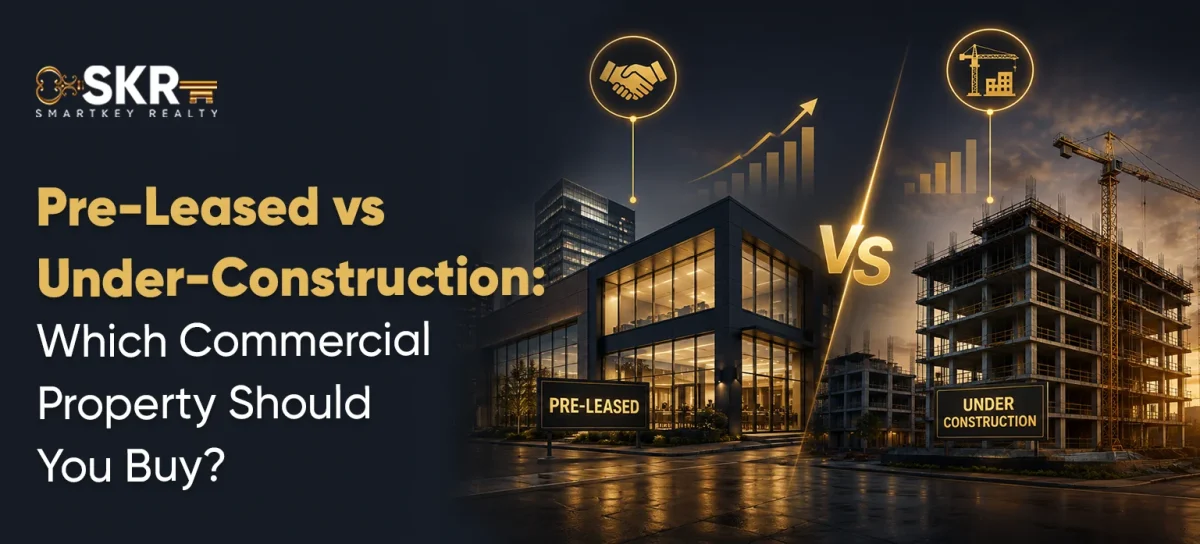
Pre-Leased vs Under-Construction: Which Commercial Property Should You Buy?

Investing in commercial real estate is a big decision. However, choosing between a pre-leased or an under-construction commercial property depends on your cash flow needs and risk capacity. Factors like counter-inflation, wealth creation, and passive income generation must be assessed to ensure that your property choice offers you lower entry prices and higher capital appreciation. 

Both property types offer financial advantages, but cater to different investor profiles. Buying the wrong asset type can lead to locked capital and unexpected property investment risks. In this blog, let’s compare Pre-Leased vs Under-Construction properties to understand which investment offers you the best returns.

Choose SmartKey Realty for Smarter Commercial Property Investment!


Pre-Leased Commercial Property: Overview 

A pre-leased commercial property is a ready-to-use asset. It is already rented/leased by tenants under valid agreements. Pre-leased properties offer owners the opportunity to earn rental income from the first day of possession. These properties are commonly found in office buildings, retail spaces, business parks, and high-street commercial locations.

Benefits of Investing in a Pre-Leased Property

A pre-leased property offers commercial investors stable and predictable returns. 

Some of its key advantages include:

  • Immediate rental income
  • Lower vacancy risk
  • Existing lease agreement
  • Easier financing from banks
  • Proven rental history

Because the property is already leased to tenants, it generates income consistently. With such properties, an investor can generate a stable cash flow and ROI with confidence.

Things to Consider Before Investing in a Pre-Leased Property

Before purchasing, always review:

  • Tenant credibility
  • Remaining lease tenure
  • Rental escalation clauses
  • Property maintenance costs
  • Occupancy history

A strong tenant and a long lease can significantly improve the property’s investment value.

Under-Construction Commercial Property: Overview 

An under-construction commercial property is still being built. When investors invest in or buy such properties, they get new properties that can be used as desired. These properties are sold at lower prices than ready-to-move properties. If utilized correctly, under-construction properties can generate much higher revenue in a few years. 

Advantages of Investing in Under-Construction Projects

Buying early in a project may provide several financial benefits.

These include:

  • Lower purchase price
  • Flexible payment plans
  • Better unit selection
  • Higher appreciation potential
  • Opportunity for long-term capital gains

Property location plays a key role in its future returns. If an under-construction property is in a popular location, it has a much higher chance of being leased right after project completion and possession. 

Things to Consider Before Investing in Under-Construction Projects 

Under-construction projects are riskier than pre-leased projects. 

Common concerns include:

  • Construction delays
  • Market fluctuations
  • Delayed rental income
  • Project approval issues
  • Builder reliability

It is important to research the property and the developer to ensure it is the right investment. 

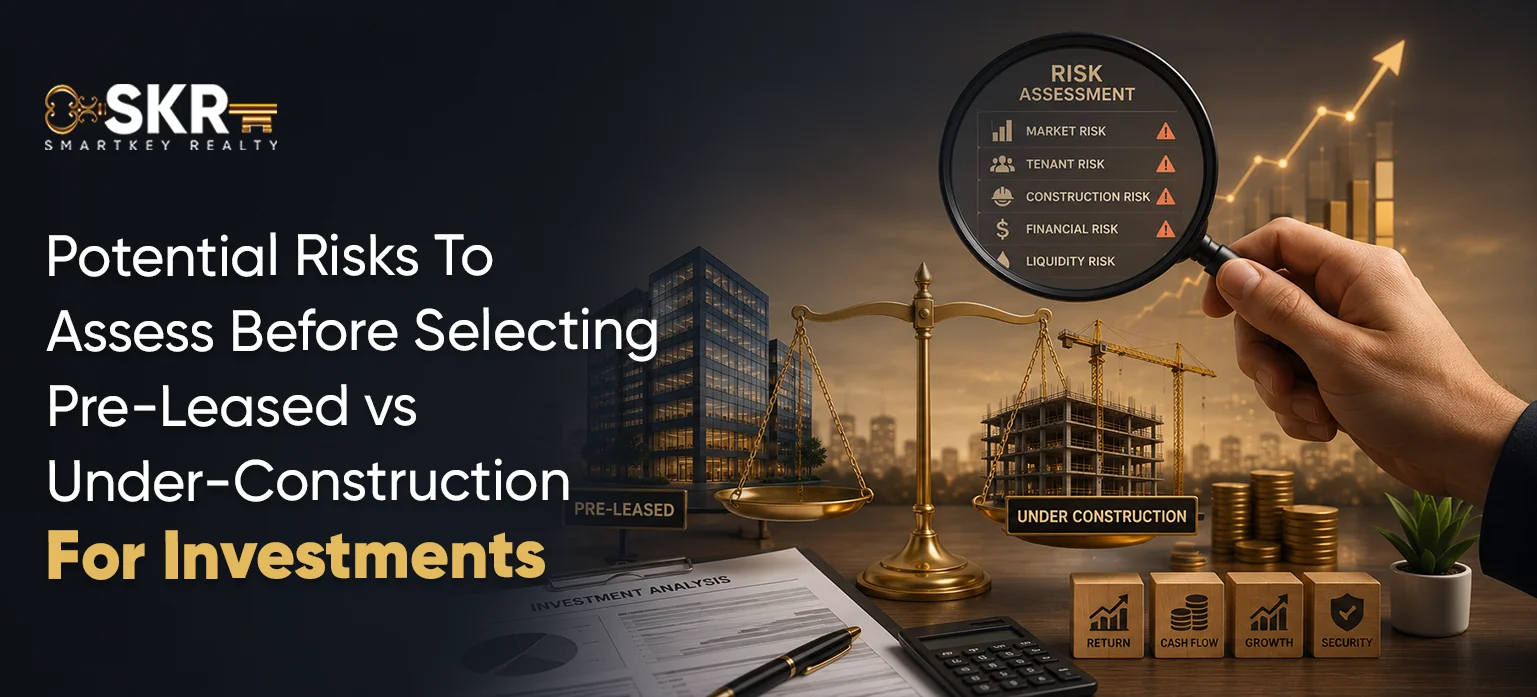
Potential Risks To Assess Before Selecting Pre-Leased vs Under-Construction Properties For Investments

Properties For InvestmentsEvery commercial property investment carries some level of risk. Evaluating these risks before investing is essential to make an informed decision and avoid costly mistakes later. 

Construction Delays

Delayed possession is one of the key concerns linked with under-construction properties. Project approvals or labor shortages can extend timelines, delaying both occupancy and returns.

Tenant Stability

When you buy a pre-leased property, your rental income relies on the current occupant. It is important to maintain tenant stability for a stable income. 

Market Demand

Commercial property value is linked directly to local business activity. If you buy a property in an area with low demand or too many empty buildings, you will struggle to get high rent or sell the property for a good profit later.

Developer Reputation

Before signing a contract for any unfinished project, make sure to check developer credibility. Choosing an established developer is the best way to avoid construction delays.

Liquidity Risk

Commercial real estate is a long-term investment that is much harder to sell quickly than regular houses. If you need to get your cash back fast, doing so during a slow market can be very difficult without dropping your price.

Financing Challenges

Loan limits, down payment sizes, and interest rates shift based on the project’s completion stage, making early financial planning vital. Understanding financing terms in advance helps you plan your investment more effectively.

Pre-Leased vs Under-Construction: Key Differences

Both property types have their risks and benefits, which makes proper research and assessment important. Here is a table that highlights the key differences you must check. 

FactorPre-Leased PropertyUnder-Construction Property
Rental IncomeImmediateStarts after completion
Investment RiskLowerModerate to High
Capital AppreciationModerateHigher potential
Purchase CostHigherUsually lower
Loan ApprovalEasierDepends on project stage
Cash FlowImmediateDelayed
Best ForPassive incomeLong-term investors

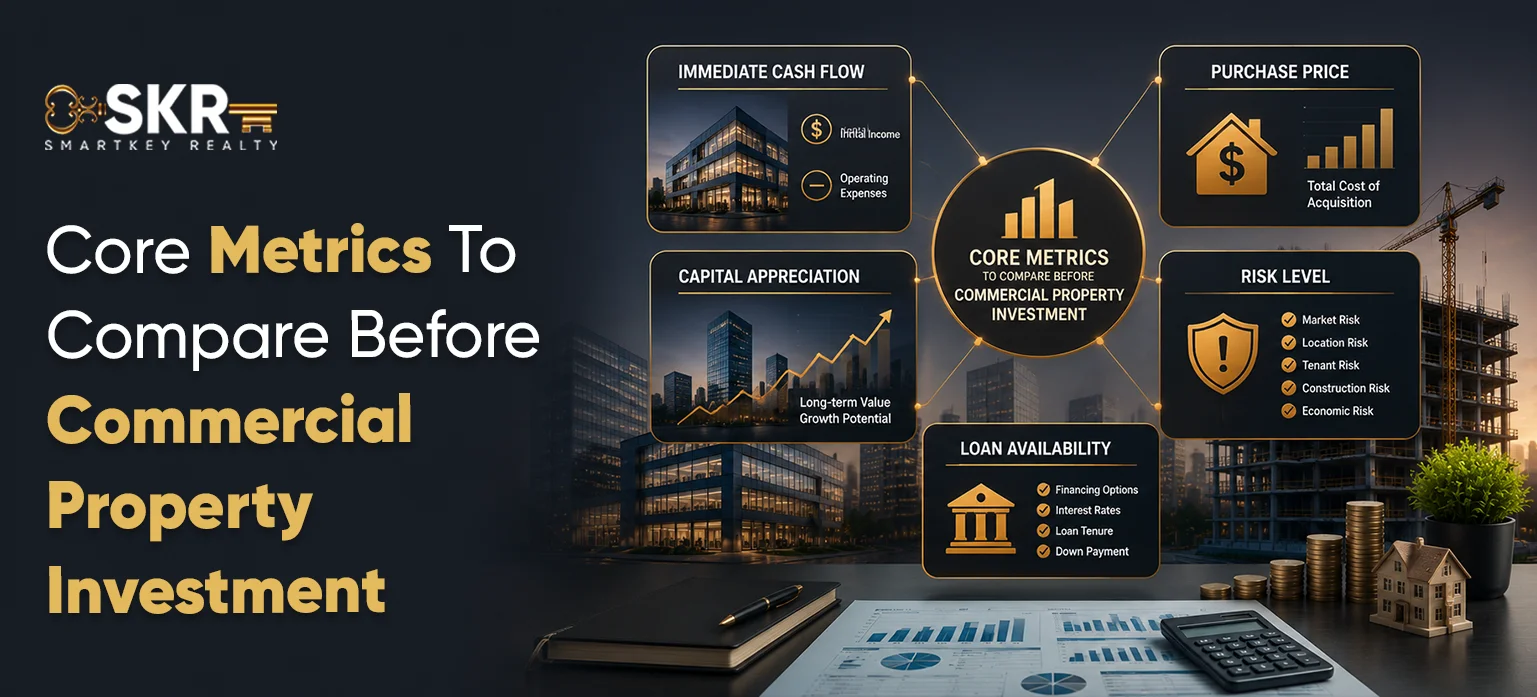
Core Metrics To Compare Before Commercial Property Investment 

Commercial Property Investment

Here are the core metrics an investor must check before making any property investment. 

Immediate Cash Flow

Pre-leased commercial properties start generating income right from possession. As they already have tenants, the investment is highly attractive to investors.

Under-construction properties do not provide immediate returns. Returns typically start after a few months.

  • Best Choice: Pre-Leased Property

Purchase Price

Under-construction commercial properties can be bought or leased with flexible payments. Developers offer discounts and much more affordable pricing to attract new buyers. 

Pre-leased commercial properties are expensive. If you do not have a good investment fund, getting a leased property might be tough.

  • Best Choice: Under-Construction Property

Capital Appreciation

Properties purchased during the construction offer better returns in the long term. 

Pre-leased properties grow in value over time, but their growth is more stable since the properties are not new or advanced. 

  • Best Choice: Under-Construction Property

Risk Level

Pre-leased investments involve much lower risk as the building is already operational. 

Under-construction investments carry higher risk due to project delays and quality issues. 

  • Best Choice: Pre-Leased Property

Loan Availability

Banks are generally more comfortable financing completed commercial properties due to less risk. 

Loans for under-construction projects are harder to secure. It often involves extra legal documentation to meet borrower requirements. 

  • Best Choice: Pre-Leased Property

Which Commercial Property Should You Buy?

The right investment depends entirely on your financial goals and risk-taking capacity.

Choose a pre-leased commercial property if your priority is immediate rental income and lower investment risk. Choose an under-construction commercial property if you can wait for long-term wealth creation. 

Before making any investment, conduct a thorough evaluation and partner with a professional property consultant, such as SmartKey Realty, to ensure you make the right choice. 

Choose SmartKey Realty for Smarter Commercial Property Investment!

Conclusion 

Looking for high-potential commercial investment opportunities?

SmartKey Realty helps investors find safe, high-quality commercial properties. We offer strong market research and strategic location insights to help you make a confident investment decision.

Categories
buy property

7 Essential Tips for Buying a Home in Growing Real Estate Markets

Modern investors view real estate as a stable, high-return investment that supports long-term wealth growth. With the rise in the real estate market, property demand has also increased. However, without the right investment tips, you may end up overpaying for the property. 

To negotiate the best deal and find the best investment opportunity, this guide will help you out. Let’s learn 7 essential tips for buying a home in growing real estate markets to make your investment more rewarding.  

Find the Perfect Home Under Your Budget with SmartKey Realty!

1. Secure A Property Pre-Approval First

In a growing real estate market, property purchases are very competitive. Getting pre-approved for a mortgage before you start viewing properties helps you manage your finances and gives you a clear understanding of your investment budget. It helps you avoid overspending during bidding.

Getting pre-approved also helps you:

  • Lock in financing
  • Strengthen your offer with a pre-approval letter

Being financially prepared allows you to make confident decisions in a fast-moving market.

2. Research Future Development Plans Near the Property 

The future growth of the property location affects its ROI. Before finalizing an area, review its development plans to identify upcoming infrastructure projects such as highways, public transit, and schools that can improve your property value. 

Look for factors such as:

  • Public transportation projects
  • Road expansions
  • Schools and healthcare facilities
  • Commercial developments

Buying with future research can help with planned growth returns. 

3. Analyze Job Growth Data Around the Location 

A strong employment industry indicates a strong real estate market. Areas attracting major employers and companies show stronger property appreciation over time.

Pay attention to:

  • Major company moving in the area
  • Corporate relocations
  • Nearby business hubs
  • Employment growth trends
  • Rental demand

If you invest in a property near local industries, it helps to protect your investment returns. 

4. Calculate the True Property Cost 

The purchase price is only an element of buying a home. Property is often linked with property taxes, HOA fees, insurance premiums, and maintenance costs. These costs add up to the property’s true cost and help you manage your investment value. 

Be sure to consider the following:

  • Future property taxes
  • Homeowners association (HOA) fees.
  • Home insurance costs.
  • Property maintenance expenses.
  • Utility bills.

Understanding your total ownership costs will help you make more informed property investments. 

5. Inspect for Rushed Construction

If you are investing in new construction with less handover period, the construction might be rushed. Ensure you get a professional home inspection to identify structural issues that might affect property value in the future. 

A thorough inspection should include:

  • Foundation and structural integrity.
  • Roofing condition.
  • Plumbing systems.
  • Electrical systems.
  • Framing quality.
  • Builder or developer reputation.

A detailed inspection helps you avoid unexpected repair expenses after purchasing your home.

6. Avoid Overcustomizations of the Property

Luxury upgrades don’t always increase its property value. Instead, it may affect the practical layout of the property and reduce construction quality. 

Focus on:

  • Functional floor plans.
  • Standard designs.
  • Quality construction.
  • Prime location.
  • Cost-effective upgrades.

A property in a posh location will always deliver better returns, regardless of its customization. 

7. Create a Long-Term Exit Strategy

If you are purchasing the property for investment purposes, review your exit plan. Ensure you know what you’ll do if you decide to sell or rent the property.

Your exit strategy should justify:

  • Estimated rent returns.
  • Local resale demand.
  • Market liquidity rates. 
  • Long-term market appreciation.

Having a clear exit strategy helps with financial flexibility for stress-free investments.

Common Mistakes to Avoid While Buying a Home in Growing Real Estate Markets

Buying a Home in Growing Real Estate Markets

Simple real estate investment mistakes can lead to financial setbacks. It is important to be aware of the common mistakes to protect your investment.

Buying Without Research: 

Learn about the location, property facilities, and future cost appreciation before choosing a home.

Going Over Your Budget: 

Stick to a budget that includes additional charges. Include costs like taxes, insurance, and maintenance to make a well-rounded budget. 

Skipping the Home Inspection: 

Always inspect the property to finalize its real cost. Check for hidden repairs or construction quality issues.

Ignoring the Location: 

Choosing a location near good schools and means of transport is important. Such factors affect future property value. 

Making a Quick Decision: 

Take time to compare different properties before making an offer.

Not Checking the Builder’s Reputation: 

If you’re buying a new home, always research the builder’s past projects. Make sure the construction is valid and authorized before purchase. 

Conclusion 

Ready to buy your dream home in a growing real estate market? 

At SmartKey Realty, we’re committed to making your home-buying journey simple and stress-free. Our experienced team is here to help you find the right property with confidence.

Categories
buy property

Best plots near jewar airport

The development of the upcoming Noida International Airport has completely changed the real estate conversation around the Yamuna Expressway region.

What was once seen as a long-term infrastructure corridor is now becoming one of the most closely watched property markets in NCR. Investors, end-users, and developers are all looking at plots near Jewar Airport because of the expected growth in connectivity, commercial activity, and future demand.

And honestly, plots are attracting even more attention than apartments right now.

Why? Plots offer flexibility, lower maintenance, and strong long-term appreciation potential if the location develops well.

But not every plot near Jewar Airport is automatically a smart investment. Some areas have better infrastructure planning, stronger connectivity, and more realistic growth potential than others.

Get Exclusive Plot Deals Near Jewar Airport with SmartKey Realty

Why Plots Near Jewar Airport Are in Demand

The airport project is expected to boost:

  • Employment opportunities
  • Commercial activity
  • Warehousing and logistics
  • Hospitality and retail sectors
  • Residential demand

Large infrastructure developments usually increase nearby land values over time. That’s why plotted developments along the Yamuna Expressway and surrounding sectors are seeing growing interest.

Many buyers are also choosing plots because:

  • Entry prices can still be relatively affordable in some sectors
  • Future appreciation potential appears strong
  • Buyers can build homes later at their own pace
  • Land is often seen as a more flexible long-term asset

Best Areas for Plots Near Jewar Airport

1. Yamuna Expressway Sectors

The Yamuna Expressway region remains the biggest hotspot around the airport corridor.

Several sectors near the expressway are attracting investors because of:

  • Direct road connectivity
  • Planned urban development
  • Future commercial activity
  • Proximity to the airport project

Plots here are popular among both investors and future homebuilders.

Why Buyers Prefer This Area

  • Strong future infrastructure potential
  • Better long-term connectivity
  • Growing developer activity
  • Planned township developments

2. Sector 22D and Sector 18

These sectors are gaining attention because of their strategic location near the expressway and airport influence zone.

The demand here is largely driven by:

  • Future residential expansion
  • Investor activity
  • Better accessibility projections

Buyers looking for mid-to-long-term investment opportunities often explore these sectors first.

3. Jewar Town Area

Plots closer to the main Jewar region are also seeing increasing demand.

As infrastructure develops further, this region may benefit from:

  • Hospitality growth
  • Retail expansion
  • Rental demand
  • Commercial support services

However, buyers should carefully verify legal approvals and land titles before purchasing in this area.

4. YEIDA Planned Sectors

Plots under the Yamuna Expressway Industrial Development Authority (YEIDA) are among the most discussed options near Jewar Airport.

These planned sectors attract buyers because:

  • Infrastructure planning is more organized
  • Roads and utilities are better structured
  • Government-backed planning improves confidence

Many investors specifically prefer authority-approved plots for better transparency and future development potential.

5. Greater Noida Near Yamuna Connectivity

Some buyers are also exploring areas between Greater Noida and the Yamuna Expressway corridor.

These locations may benefit from:

  • Spillover residential demand
  • Metro and expressway connectivity
  • Growing commercial activity

They can work well for buyers who want airport-driven appreciation while staying connected to developed NCR zones.

Comparison Table: Best Plot Locations Near Jewar Airport

AreaBest ForKey Advantage
Yamuna Expressway SectorsLong-term investmentStrong infrastructure growth
Sector 22D & 18Residential plotsStrategic connectivity
Jewar TownEarly-stage investorsClosest to airport activity
YEIDA SectorsSafer planned investmentOrganized development
Greater Noida CorridorBalanced investmentBetter NCR connectivity

Things Buyers Should Check Before Buying a Plot Near Jewar Airport

Plot investments can be rewarding, but they also require careful verification.

Before purchasing:

  • Check land title clarity
  • Verify authority approvals
  • Confirm zoning regulations
  • Understand road access and infrastructure plans
  • Research future development around the location
  • Verify whether the plot falls under approved layouts

Avoid buying purely based on promises of “guaranteed returns” or aggressive marketing claims.

Are Plots Better Than Flats Near Jewar Airport?

For many long-term investors, plots currently appear more attractive because:

  • Land appreciates independently
  • Maintenance costs are lower
  • Flexibility is higher
  • Future construction can happen later

However, flats may still suit buyers looking for:

  • Rental income
  • Immediate usability
  • Gated community living

The better choice depends on your investment horizon and goals.

Get Exclusive Plot Deals Near Jewar Airport with SmartKey Realty

Last Thoughts

The Jewar Airport project is expected to reshape the entire Yamuna Expressway and Greater Noida real estate landscape over the next several years.

Plots near the airport are attracting strong interest because infrastructure-led growth often creates long-term land appreciation opportunities.

But successful investment will depend on choosing the right location, not simply buying the nearest available plot. In real estate, patience and location selection usually matter more than hype.

With SmartKey Realty, you can get expert guidance on real estate. The experts here help you find the right plot near Jewar Airport within your budget. Contact SmartKey Realty today!

Categories
buy property

Freehold vs Leasehold Property Explained

Owning a property is exciting, but it starts feeling confusing when people encounter legal terms in discussions. There are a couple of things buyers commonly hear in the real estate market– “freehold” and “leasehold”. Most people start out knowing little about the difference — until it impacts pricing, ownership rights, resale value or even loan approval.

From a home-buying family to a business searching for commercial space, or an investor looking for long-term returns, knowing what freehold and leasehold real estate means will save you from some major surprises down the road.

Get Exclusive Deals on Freehold and Leasehold Properties with SmartKey Realty

What Is Freehold Property?

A freehold property means you fully own both the property and the land it stands on. Once the purchase is complete, the ownership belongs entirely to you. 

There is no expiry date attached to it. You can live on it, fix it up, lease it, sell it, or hand it down to your kids without worrying about renewing the lease or limitations on ownership. This is one of the reasons why freehold properties are generally viewed as safer and more attractive in the property market. 

Imagine buying an independent house where every inch legally belongs to you — that is the simplicity and comfort people associate with freehold ownership.

Why Buyers Prefer Freehold Properties

People usually lean toward freehold properties because they offer:

  • Complete ownership rights
  • Better long-term value
  • Easier resale opportunities
  • Fewer legal restrictions
  • Stronger loan eligibility from banks
  • More peace of mind

For many families, buying a freehold home feels emotionally reassuring because it becomes a long-term family asset instead of just a temporary right to occupy space.

For businesses, owning a freehold office or commercial building can create long-term stability and reduce future uncertainty.

What Is Leasehold Property?

Leasehold property works differently.

In this setup, you own the property for a fixed period, but the land itself belongs to another authority — often a government body, developer, or housing authority.

The ownership is given on lease for a certain number of years, such as 30, 60, or 99 years.

So technically, you are purchasing the right to use the property for that period.

Once the lease duration ends, renewal terms come into the picture.

Now, hearing the word “leasehold” sometimes makes buyers nervous, but leasehold property is actually very common in many cities and commercial developments.

In fact, some premium locations only offer leasehold projects.

Common Features of Leasehold Property

Leasehold properties usually come with:

  • Limited ownership duration
  • Ground rent or annual charges
  • Certain usage restrictions
  • Lease renewal conditions
  • Lower upfront pricing in some cases

For some buyers, especially businesses or investors, leasehold can still make practical financial sense.

Freehold and Leasehold: Key Differences

FactorFreehold PropertyLeasehold Property
OwnershipYou fully own the property and the landYou own the property for a fixed period, not the land
Ownership DurationPermanent ownershipLimited ownership based on lease term
Control Over PropertyGreater freedom for modifications and usageCertain restrictions may apply
Resale ValueUsually has stronger resale demandCan become harder to sell as lease shortens
Property Value GrowthOften appreciates better long termAppreciation may depend on remaining lease years
Loan ApprovalEasier to get financing from banksLoan approval may depend on lease duration
InheritanceCan easily be passed to future generationsTransfer depends on lease conditions
Upfront CostUsually more expensiveOften more affordable initially
Best ForFamilies, long-term investors, established businessesBuyers seeking affordability or premium locations
Long-Term SecurityHigher sense of ownership stabilityRenewal uncertainty may exist after lease expiry

Freehold vs Leasehold Property: Which Option Is Better for Homebuyers?

Buyers of freehold property tend to feel a greater sense of ownership and security. More homebuyers are opting for freehold properties due to the convenience, the peace of mind and the future resale value. Families believe that they are making long-term investment by buying freehold property that can be passed on from generation to generation.

For companies, freehold commercial spaces are typically considered a stable investment that may increase in value over time while reducing reliance on rented facilities.

Concurrently, leasehold properties continue to be a sensible choice, particularly in high-end city areas where freehold space can be prohibitively expensive. Leasehold property is popular among startups and expanding businesses as it usually comes with lower initial costs and easier access to prime commercial locations.

Ultimately, the best option will depend on your budget, where you’ll be living, and your investment goals.

Get Exclusive Deals on Freehold and Leasehold Properties with SmartKey Realty

Final Thoughts

There is no one answer for this question: 

Some customers appreciate the stability of ownership and the long-term security. Others are focused on value for money, business flexibility or location.

Both freehold and leasehold titles can work well if taken up thoughtfully.

At SmartKey Realty, we believe buyers should have clarity at every step of the process before they invest. From family homes to commercial offices and everything in between, we help you make smarter, more confident choices.

Categories
buy property

Hidden Costs While Buying Property in India

Buying a property in India is not an easy process.

Most buyers focus heavily on the advertised price, ₹80 lakh, ₹1 crore, ₹2 crore, whatever the number may be. But once the booking process starts, additional charges begin appearing one after another. By the end, the actual amount paid is often much higher than expected.

In many cases, the final cost of a property becomes 10 to 20% more than the base price because of taxes, registration fees, maintenance deposits, parking charges, and several other expenses.

This is exactly why understanding hidden costs is so important before buying a home. It helps you budget realistically and prevents unpleasant financial surprises later.

Get Free Property Consultation in India from SmartKey Realty

Why Buyers Often Underestimate Property Costs

Most developers advertise the base price of the apartment or villa. Naturally, that number attracts attention.

But what buyers often don’t realize is that the base price usually excludes:

  • Government charges
  • Builder add-ons
  • Maintenance deposits
  • Loan-related expenses
  • Interior and moving costs

And because these charges appear at different stages of the purchase process, people tend to underestimate the total outflow.

First-time buyers are especially vulnerable to this.

Major Hidden Costs While Buying Property in India

Major Hidden Costs While Buying Property in India

1. Stamp Duty and Registration Charges

This is one of the biggest additional expenses when buying a property.

Stamp duty and registration charges vary by state and are mandatory for legal ownership transfer. In many Indian states, these charges together can add around 5% to 8% of the property value.

For example:

On a ₹1 crore property, this alone could cost ₹6 to 8 lakh

Home loans usually do not cover this expense fully

A lot of buyers calculate EMI affordability but forget to reserve money for registration.

2. GST on Under-Construction Properties

If you’re buying an under-construction flat, GST becomes applicable.

Currently:

  • Under-construction residential properties attract GST
  • Ready-to-move homes with a completion certificate do not attract GST

This makes ready-to-move homes slightly easier on immediate cash flow, even though their base prices may be higher.

3. Parking Charges

One thing that surprises many buyers: parking is often charged separately.

In premium projects, covered parking can cost anywhere from:

  • ₹2 lakh to ₹5 lakh or more, depending on location and project category
  • And in metro cities where parking space is limited, this becomes almost unavoidable.

4. Maintenance Deposit and Society Charges

Most builders collect advance maintenance charges at the time of possession.

This usually covers:

  • Security
  • Lift maintenance
  • Common area electricity
  • Housekeeping
  • Landscaping
  • Clubhouse upkeep

In larger gated societies, these deposits can run into lakhs.

Monthly maintenance charges afterward also become part of long-term ownership costs.

5. Clubhouse and Amenity Charges

During the site visit, you might like the additional amenities offered. Many times, those amenities are not fully included in the base price.

Builders may separately charge for:

  • Club membership
  • Sports facilities
  • Power backup
  • Smart security systems
  • Recreational amenities

Depending on the project, this can add a substantial amount to the total purchase value.

6. Floor Rise Charges

In high-rise apartments, higher floors often come at an additional cost.

Builders usually charge extra because:

  • Higher floors offer better views
  • Ventilation improves
  • Demand is higher

These charges are commonly calculated per square foot and increase progressively with each floor.

7. Legal and Documentation Costs

Property transactions involve documentation, verification, and legal checks.

Additional expenses may include:

  • Legal verification fees
  • Agreement drafting charges
  • Notary expenses
  • Documentation processing fees

Skipping legal due diligence to save money can become risky later, especially in projects with approval or title issues.

8. Home Loan Processing Charges

Many buyers focus only on the loan amount and interest rate, but forget the upfront bank charges.

Banks may charge for:

  • Loan processing
  • Technical evaluation
  • Legal verification
  • Administrative processing

Typically, this ranges between 0.25% and 1% of the loan amount.

9. Interior and Furnishing Costs

This is probably the most underestimated expense.

Even after buying the property, additional spending begins:

  • Modular kitchen
  • Wardrobes
  • Lighting
  • Curtains
  • Furniture
  • Appliances
  • False ceiling and décor

In many newly purchased apartments, the interior setup itself can cost several lakhs, depending on lifestyle and expectations.

10. TDS on Property Purchase

If the property value exceeds ₹50 lakh, buyers must deduct 1% TDS under Section 194-IA while making payments.

A lot of buyers miss this during transactions, especially in under-construction projects with multiple payment schedules.

A Simple Rule Most Buyers Forget

A good thumb rule is this:

If your planned property budget is ₹1 crore, don’t assume ₹1 crore is enough.

Realistically, keep an additional:

  • 10 to 15% buffer for apartments
  • Slightly more for luxury or under-construction projects

That financial cushion makes the entire process much less stressful.

Get Free Property Consultation in India from SmartKey Realty

Final Thoughts

Buying a property is already one of the biggest financial decisions most people make. Hidden charges become a problem mainly when buyers are unaware of them from the beginning.

The smartest homebuyers are not necessarily the ones who negotiate the lowest base price; they’re the ones who understand the total cost of ownership clearly.

Before finalizing any property:

  • Ask for a complete cost sheet
  • Clarify every additional charge
  • Calculate registration and tax costs early
  • Keep buffer money aside for interiors and emergencies

Because in real estate, the amount written in the advertisement is rarely the final amount you actually pay. Therefore, you need a reliable real estate partner who takes care of these things. 

Contact SmartKey Realty to get expert recommendations that can help you find the best properties in India that suit your lifestyle. They help bridge the gap between potential buyers and top developers right here! Contact SmartKey Realty today!

Categories
buy property

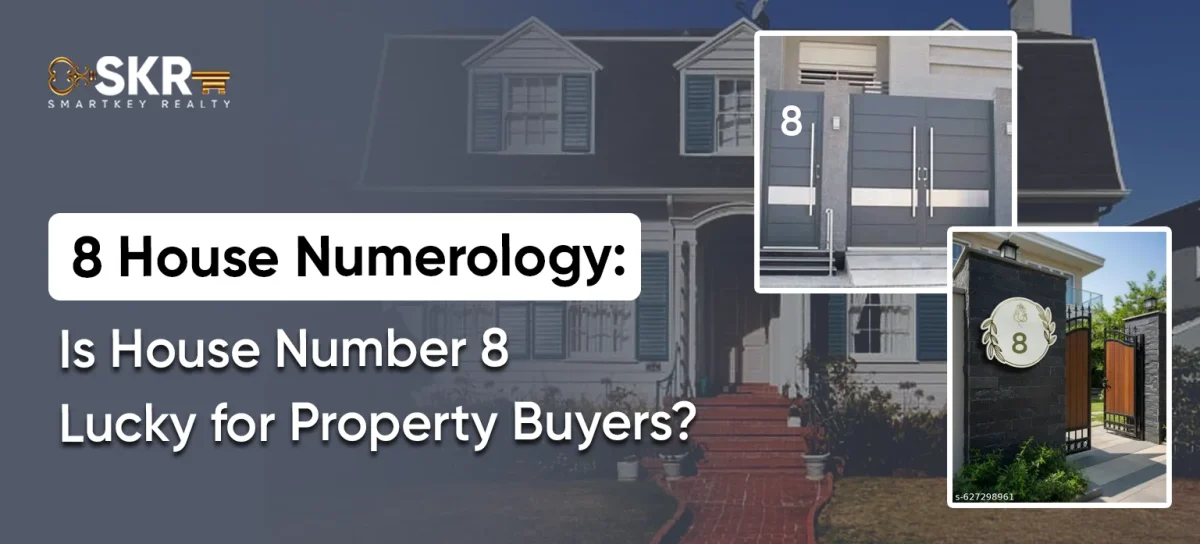
8 House Numerology: Is House Number 8 Lucky for Property Buyers?

Real estate properties are often assigned specific house numbers to make their addresses unique. However, in house numerology, these numbers are believed to influence both the personal and professional aspects of a resident’s life. It is also known to impact the sales of properties. Houses with specific house numbers are more in demand as they are often linked with better luck and growth. One number that consistently draws attention is 8. It is a powerful number linked with growth, wealth, and success. 

For real estate builders and property investors, understanding their property details, such as the house number, is important to ensure they avoid any negative influence. This guide explores all you need to know about house number 8.

Find Your Next Investment Property with House Number 8 - SmartKey Realty

Understanding House No 8 Numerology​

In numerology, the number 8 represents strength and growth. Due to this positive influence, houses with the number 8 are often sold at premium prices. Buyers are attracted to buy a house with the number 8 because it offers: 

  • Strong Financial Energy

House number 8 is often associated with prosperity. Many believe it attracts business and income growth opportunities.

  • Growth for Entrepreneurs and Professionals

If you run a business or manage any business, this number can complement your ambition. It is associated with professional growth and work-life discipline.

  • Stability to the Residents 

The energy of 8 supports structure and control. The number is assured with long-term planning, which supports buyers looking for security and progress. 

Is House Number 8 Lucky for Property Buyers

House number 8 is widely considered lucky, especially for buyers. It offers new buyers financial growth and growth in their careers. According to 8 House Numerology, the number 8 is strongly connected to wealth and great achievements. 

For property buyers, house number 8 can be a positive choice. It is believed to attract opportunities and improve financial decisions to ensure the best returns. This alignment makes it appealing for real estate builders and investors who are aiming to build assets over time.

However, house number 8 supports growth if residents have a positive lifestyle. House number 8 may not suit buyers looking for a relaxed living space. If residents prefer a calm environment, they may need to balance their lifestyle to add more relaxation activities.

Do’s and Don’ts for Buying A Property With House Number 8

Do’s and Don'ts for Buying A Property With House Number 8

Here is what a new resident must do to benefit the most from 8 House Numerology. 

8 House Numerology: Do’s

  • Align Your Goals with the Energy

Make sure your lifestyle matches the strong growth-driven energy of house number 8. It is a success-driven space, so ensure you are working hard to get professional growth for the best results. 

  • Maintain Financial Discipline

Since this number is related to high energy, residents must manage their finances wisely. Budgeting and planning are recommended to keep your expenses under control. 

  • Create A Balanced Lifestyle 

Add elements that promote calmness in your lifestyle. Ensure your house has enough natural light and relaxing spaces. This helps balance the intense energy.

  • Focus on Long-Term Growth

House number 8 supports steady long-term progress. Think about long-term growth when investing in properties related to 8 House Numerology. 

  • Use Positive Design Elements

A well-organized home without excess clutter helps with the positive growth of the residents. 

8 House Numerology: Don’ts

  • Don’t Avoid Emotional Well-Being

House No 8 Numerology​ suggests that residents must focus on their personal life and mental stress. Don’t avoid your relationships and emotional stress to balance the strong growth energy. 

  • Don’t Overburden Yourself Professionally 

The energy of house number 8 can push you to work harder. To keep your stress low, set boundaries to avoid energy burnout.

  • Avoid Unplanned Financial Expenses 

While the number attracts wealth, it does not guarantee success. Avoid impulsive investments to grow your wealth over time. 

  • Don’t Neglect Comfort

 House number 8 focuses on work growth and professional success. Ensure your house still feels positive and satisfies your personal liking. 

  • Avoid Imbalance in Lifestyle

Too much focus on money and achievement can create stress. Balance your work and health for positive growth and success. 

Find Your Next Investment Property with House Number 8 - SmartKey Realty

Conclusion 

House number 8 is a powerful choice for property buyers who are focused on growth. It is linked with success and wealth, making it a great investment opportunity. The house number 8 carries strong energy that supports residents with discipline. However, it also requires balance and mindful living.

Before making a decision, consider your goals. A house should not only bring success but also comfort and happiness. If you are looking for growth opportunities, house number 8 can be a meaningful investment. With SmartKey Realty, get expert property insights and the latest updates on industry trends. Our real estate advisors help you make smart property choices for guaranteed returns.

Find Us Fast

Let's Discuss Your Property Goals.

Our Locations
india
India
dubai
Dubai